Heart Rate Variability (HRV): What It Really Means for Triathletes
When it comes to recovery, performance, and training load, heart rate variability (HRV) is one of the most powerful, and misunderstood, metrics available to athletes. If you've seen HRV scores on your smartwatch or in your training app and wondered what they really mean, this article is for you.
We’ll cover:
What HRV actually measures
How to track it properly
Why your HRV is unique to you and not something to compare with others
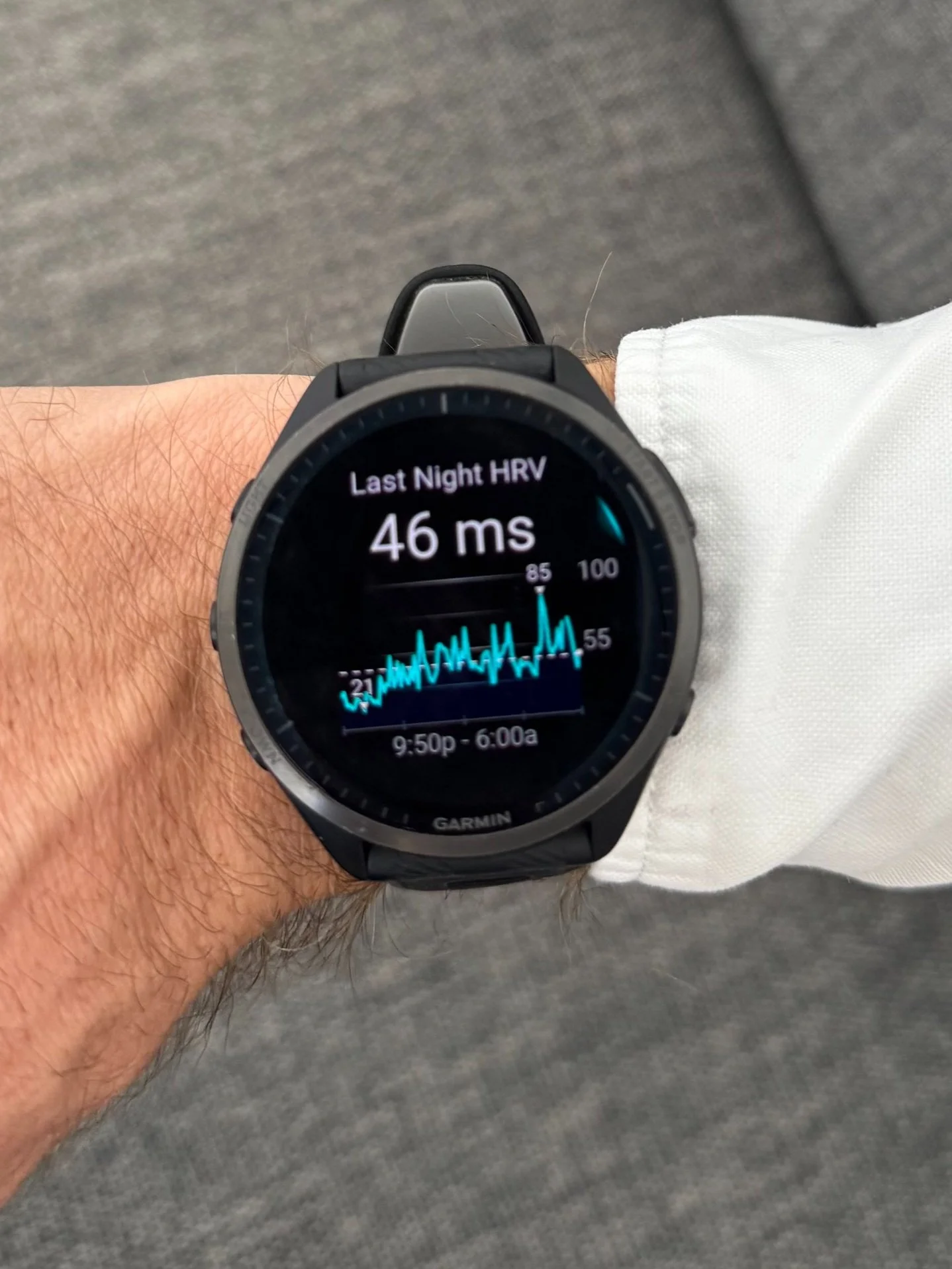
🫀 What Is HRV?
Heart rate variability is the variation in time between consecutive heartbeats. While your heart might beat 60 times per minute, it's not ticking like a metronome. One beat might be 1.02 seconds after the last, the next 0.94 seconds later. That fluctuation is your HRV.
A higher HRV generally indicates a well-recovered, resilient nervous system that’s ready for stress (physical or mental). A lower HRV can mean fatigue, illness, or elevated stress.
In short:
High HRV = Ready to perform
Low HRV = Time to recover or adjust training
📊 How Is HRV Measured?
To measure HRV accurately, consistency is key. Here’s how:
✅ Best practices:
Measure at the same time each day, ideally first thing in the morning. (some sports watches measure overnight automatically)
Use the same device and method (smart ring, chest strap, HRV app, etc.)
Be rested and relaxed - don’t measure immediately after caffeine or exercise.
📱 Common tools:
WHOOP, Oura Ring, Garmin, Polar, and HRV4Training
Chest straps are the gold standard for accuracy
Wrist wearables are getting better but may be more variable
🧬 HRV Is Personal—Don’t Compare Scores
One of the biggest mistakes triathletes make is comparing HRV scores with others. Here’s why that doesn’t work:
1. Your HRV is genetically influenced.
Some people naturally have higher or lower baseline HRV. It doesn’t necessarily mean they’re fitter or healthier than you.
2. Your baseline changes over time.
As your fitness improves, your HRV might trend up but that trend is more important than the number itself.
3. Context is everything.
HRV fluctuates based on sleep, travel, stress, hydration, and even emotional state. It’s a dynamic, living signal.
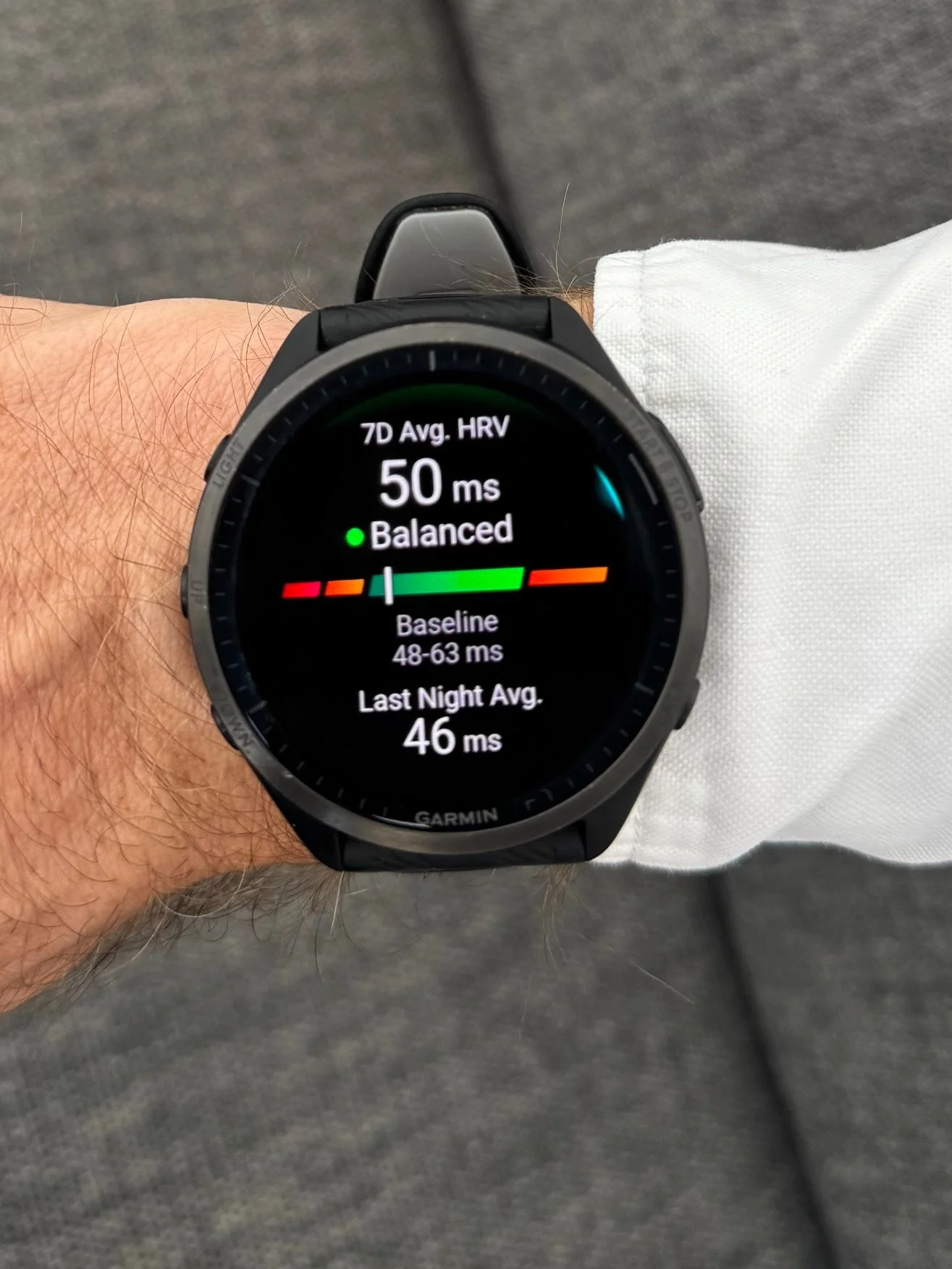
🧠 The key takeaway:
Track HRV against YOUR OWN baseline. Use it as a feedback tool, not as a scoreboard.
🏁 How Triathletes Can Use HRV in Training
Here’s how to apply HRV to your triathlon training:
Monitor recovery: Low HRV in the morning? Consider modifying or skipping a hard session.
Spot overtraining early: If HRV stays low for several days, your body might be telling you to back off.
Balance your stress load: Combine HRV with how you feel, it’s a great way to avoid burnout.
Non-triathlon factors: A busy and stressful period at work can lower your HRV. Alcohol, late night food, poor sleep, late bedtime all affect HRV.
🧪 Top tip: Don’t chase daily fluctuations. Look at weekly trends instead of panicking over one off-day.
🚦Final Thoughts
HRV is one of the most valuable insights you can get into your body's readiness. But like any metric, it’s only useful when interpreted correctly.
Here’s what matters most:
Measure consistently
Compare only to your own data
Use it to guide, not dictate, your training decisions