
What to Expect on Race Morning for IRONMAN and 70.3
Race morning is the culmination of months of training, preparation, and planning. For Ironman and 70.3 athletes, the hours before the start can be both exciting and nerve-wracking. Knowing what to expect and having a clear routine can reduce stress, allow you to focus, and help you start the race feeling calm and confident.
This guide walks through the key steps and considerations for race morning, from waking up to the moments just before the start.
See our guide here for What To Expect on Race Week if you haven’t read that already.
1. Waking Up and Morning Routine
Start the day early enough to have time for a relaxed breakfast, last-minute gear checks, and travel to the swim start. Most athletes wake between three and four hours before their wave begins. This sounds like a long time, but you need to allow to eat, get to the race and for any unforeseen things that could cause you delays and stress.
Breakfast should be familiar, easily digestible, and sufficient to fuel the swim and early bike. Common choices include oatmeal, toast with nut butter, bananas, or a small energy bar. Drink water and electrolyte fluids gradually rather than consuming large volumes at once.
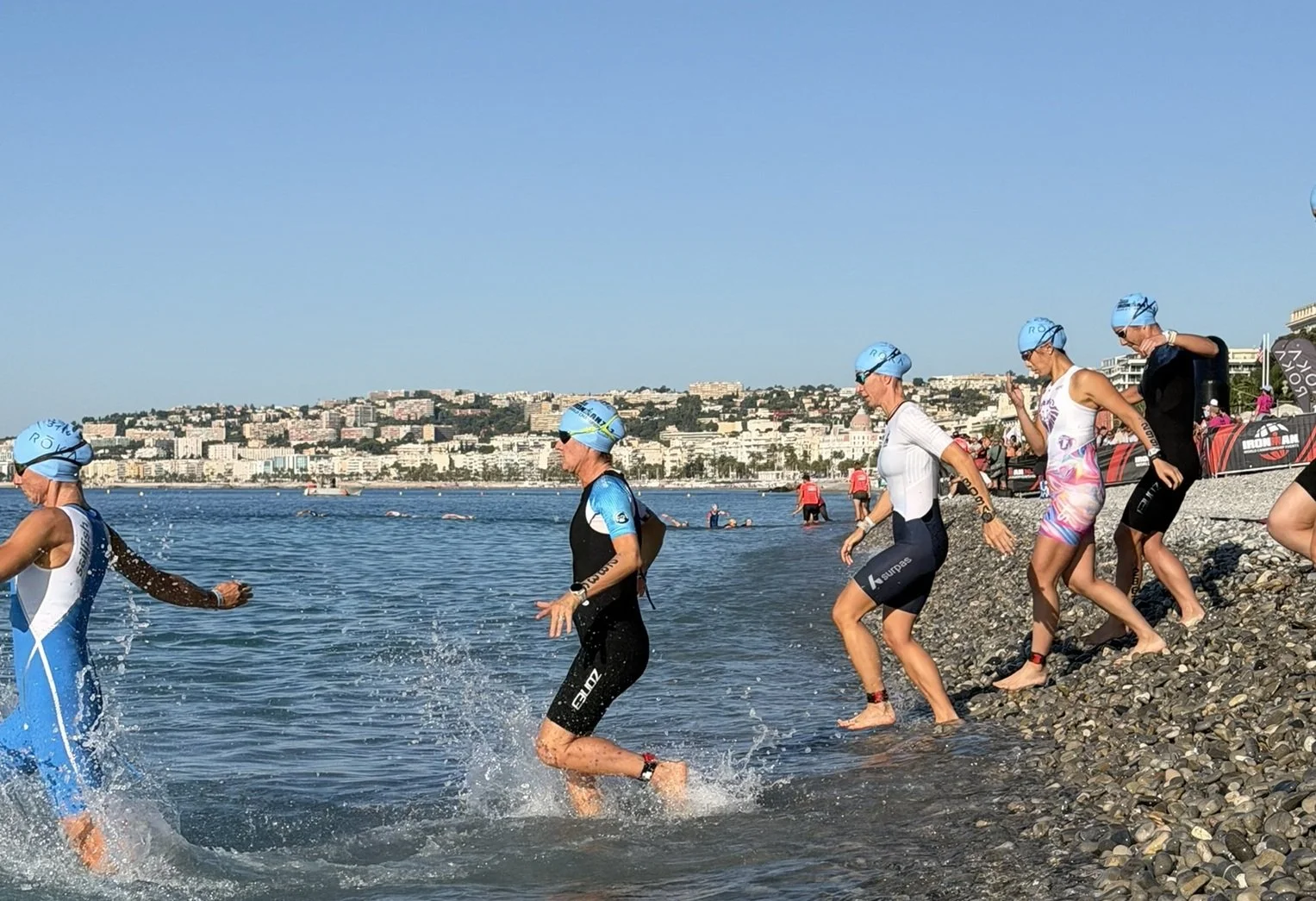
Avoid trying anything new on race morning. Stick to foods and drinks you have practised during training to reduce the risk of gastrointestinal discomfort.
2. Applying Race Tattoos and Timing Chip
Before leaving for transition, apply your race number tattoos and timing chip. Most races provide temporary race number tattoos to be applied to your arms and sometimes legs. Follow the instructions carefully, ensuring the tattoo is firmly pressed against clean, dry skin and allowed to set.
Timing chips are usually worn around the ankle. Secure it according to instructions and double-check it cannot easily come loose during the swim, bike, or run.
3. Before You Leave
At your accommodation, check items that are not already in transition. This includes swim gear, nutrition, gels, sunscreen, watch, and any clothing or small accessories you will carry with you to the start. Ensure nothing essential is left behind
4. Travel to Transition
Arrive at the transition area early. This allows time to find your bike and set up any last-minute items without rushing. Familiarise yourself with landmarks and confirm your bike location.
Use the restroom before entering transition to avoid lines during the countdown to the start - be prepared to queue. Bring any additional clothing or warming layers that will be removed before the swim start.
5. Final Check of Gear
Once at transition, perform a thorough check of your gear. Check your gear bags (bike and run) have everything you need. Ensure your bike is correctly racked, transition bags are in the right place, timing chip is secure, and all gear is arranged according to your planned order for swim-to-bike and bike-to-run transitions. This double-check ensures nothing is forgotten and helps reduce last-minute stress.
6. Drop Bags
If your race uses morning clothes bags or special needs bags, drop them off at the designated area. Check that each bag is labelled clearly with your race number and is packed according to race rules. Note the location for post-race collection and ensure you do not leave anything essential in these bags.
7. Warm Up and Mental Prep
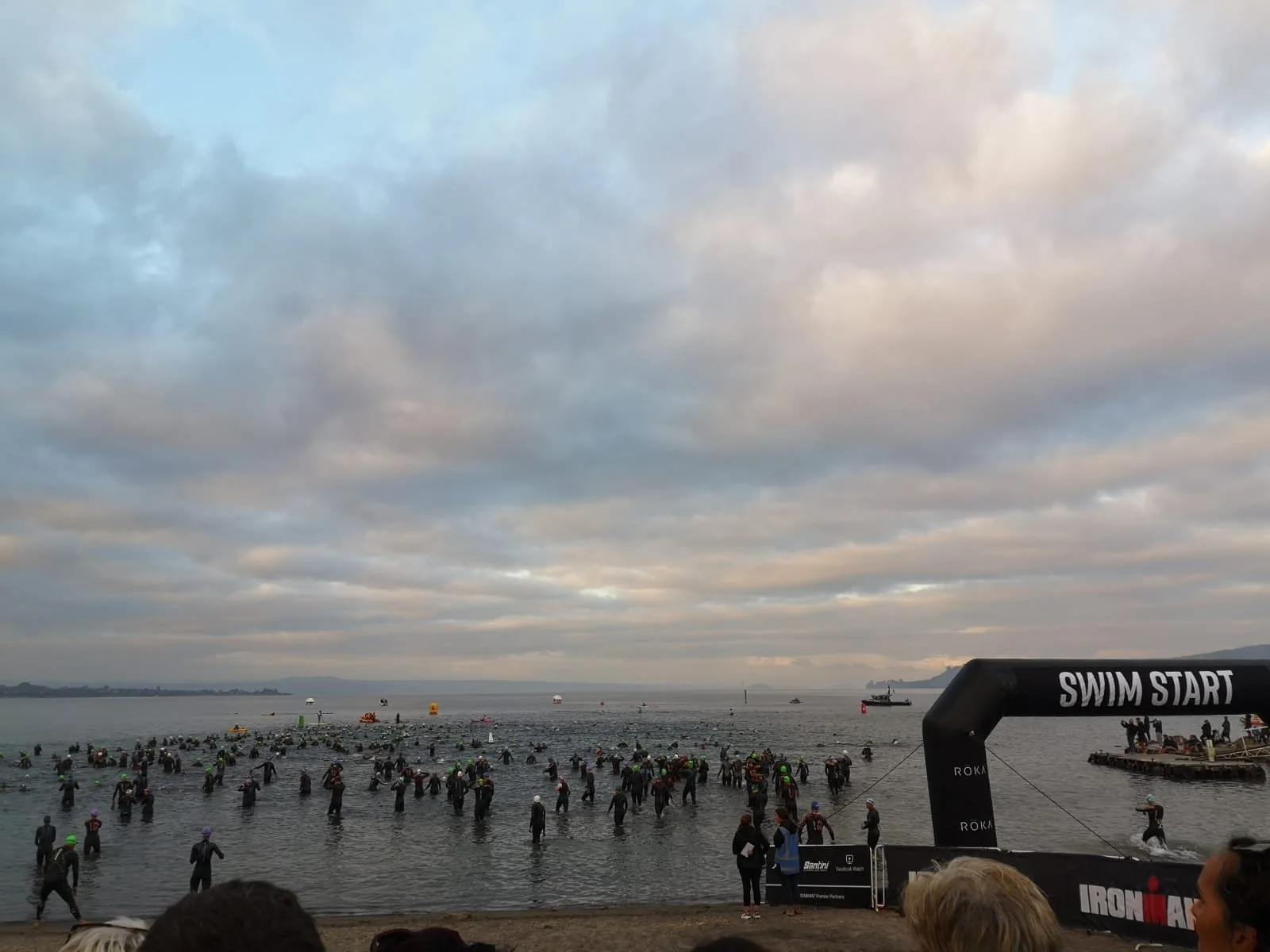
Warm up at the swim start
A short warm-up can help wake the body and settle nerves. This could include light jogging, dynamic stretching, or a few easy swim strokes if allowed. Get in the water if you can to get used to the temperature so it isn’t a shock when you start the race.
Visualise the race in stages. Mentally rehearse transitions, swim exits, bike handovers, and the first kilometres of the run. Stick to your routine and trust the preparation you have done.
8. Get to Swim Start
Listen for announcements and follow the guidance of race officials. Waves or corrals are typically called in advance, so know your start time and location. Be prepared to spend time standing around. Make sure you’re in the right wave for your swim ability.
At this point, it’s down to trusting your prep and taking each stroke and stride as they come.
Final Thoughts
Race morning sets the tone for the entire event. A structured routine, calm mindset, and confidence in your preparation are key to a smooth start.
The general rule is to allow more time than you think you need to handle queues, mass crowds and anything that might go wrong.
Arrive early, follow familiar routines, and focus on controlling what you can. Trust your training, stick to your plan, and approach the start line with focus and excitement rather than stress.