5 Ways to Become a Stronger Cyclist
If you're new to cycling, or you've never quite felt confident on two wheels, it's easy to assume that getting stronger is something that happens to other people: the ones in the matching kit who look like they were born on a bike. They weren't. Every confident rider you see started out braking too much, wobbling on corners, and wondering if they were doing it all wrong too.
Getting stronger isn't about natural talent or gritting your teeth through pain. It's about a handful of simple habits that build fitness and confidence at the same time, done consistently over time. Here are five of them, drawn from years of cycling ourselves and coaching busy people from their very first nervous ride through to the finish line of an Ironman.
1. Ride with structure, not just miles
If every ride sits at the same "moderately hard" effort, you're training yourself to be moderately good. It feels productive because it's uncomfortable, but that grey zone is where a lot of fitness goes to die. It's too hard to build a real aerobic base and too easy to lift your ceiling.

The fix is to give each ride a job. Easy rides should be genuinely easy, and hard efforts should be genuinely hard.
Most of your riding should be easy, which we'll come to next. But when it’s time to go hard, make it count with structured intervals rather than just riding until you're tired. A couple of reliable sessions will take you a long way (when done at the right time of a training phase). Following a plan the progressively builds in volume, intensity and duration with the right amount of recovery at the right is essential.
Do this consistently and your "comfortable fast" gets faster. To train these properly, it's worth testing your numbers with an FTP or ramp test so you're working to real zones rather than guessing. Guessing usually means going too hard early and fading, which teaches your body the wrong lesson.
2. Build your aerobic engine
The single biggest driver of cycling strength for most amateurs is the boring one: time spent riding easy, at a conversational pace where you could hold a full sentence without gasping.
This is the effort that builds the engine underneath everything else. It develops your ability to burn fat for fuel, grows the tiny blood vessels that feed your muscles, and makes you durable enough to still feel strong three hours into a ride. It's unglamorous and it feels almost too gentle, which is exactly why so many people skip it.
The discipline is in holding back. If you can ride easy without letting your ego drag the pace up, you'll build a foundation that makes every hard session land better. Most of your weekly riding should live here.
3. Sharpen your handling and road skills
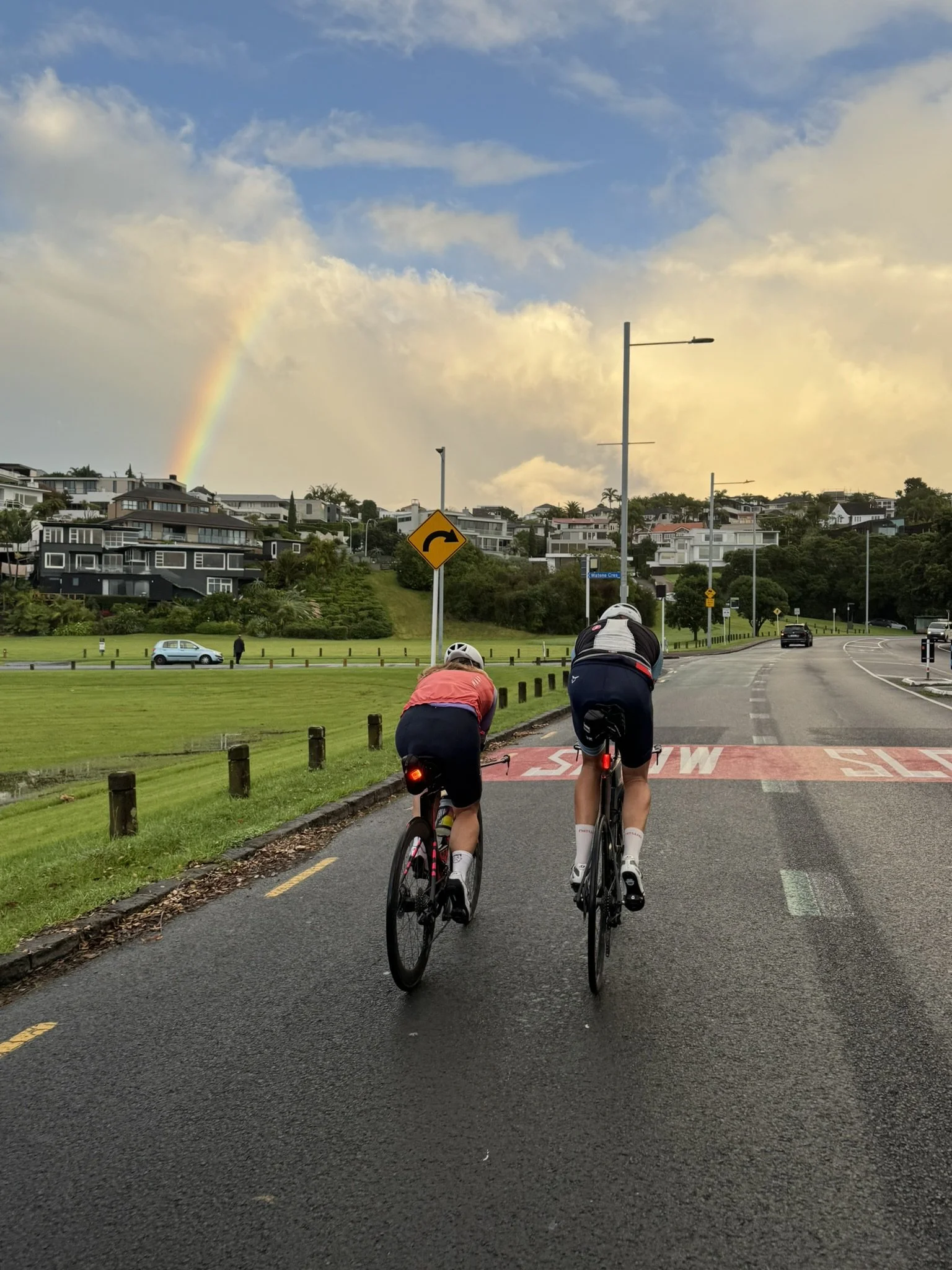
Fitness is only half of cycling. The other half is being able to actually ride the bike well: holding a straight line, cornering with confidence, descending without death-gripping the bars, eating and drinking without swerving, and staying comfortable when the road is busy, windy or wet. None of that comes from the indoor trainer, and for a lot of adult-onset cyclists it's the real thing holding them back, not the engine.
The fastest way to improve is to get outside and ride with people who are better than you. Join a club or a group ride and pay attention to what the experienced riders do: how they set up for a corner, when they change gear, how they hold a wheel, how they read the road ahead. You'll pick up more in a few group rides than in months of riding alone, and most cyclists are happy to share what they know if you ask.
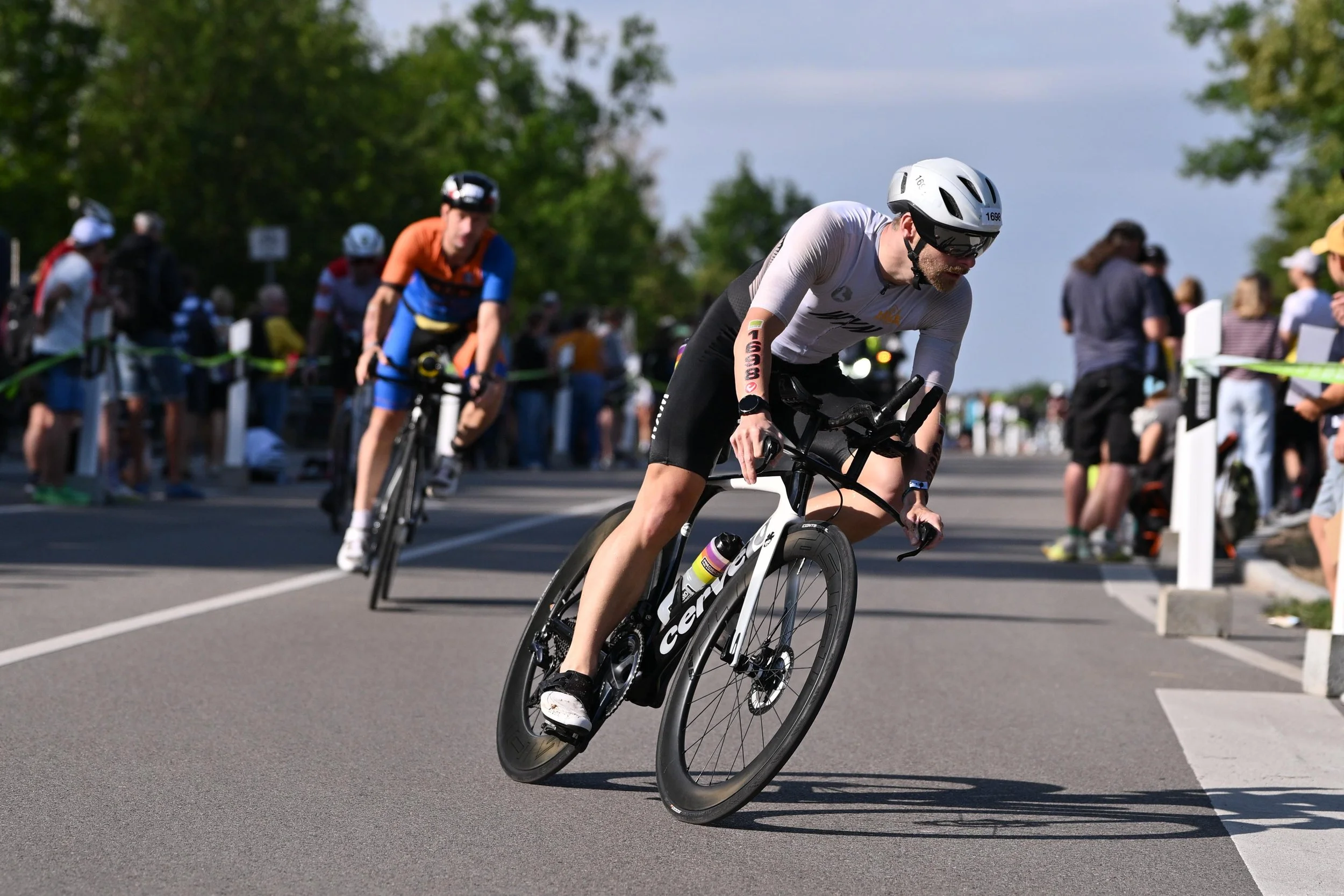
Then practise it deliberately. Work on looking through corners rather than at your front wheel, braking before the bend instead of in it, and holding a steady line while you reach for a bottle. These are small skills, but they add up to free speed: better handling lets you carry momentum through corners and down descents that you'd otherwise scrub off, and it keeps you safer while you do it. And it will make your ride a lot less nerve-wracking.
There's no shame in coming to the sport later with a strong aerobic base and shaky bike handling. Plenty of good runners and swimmers do. But it’s worth closing that gap on purpose rather than hoping it sorts itself out.
4. Get strong off the bike
Cycling strength isn't only built on the bike. Time in the gym is one of the most underused tools, especially for those of us who took up the sport as adults and are quietly losing muscle year on year if we do nothing about it.
Two short sessions a week is enough. Focus on compound movements that build real force: squats, deadlifts, lunges, and single-leg work to iron out the imbalances that riding hides. You're not chasing a physique. You're building the ability to produce power late in a ride, protect your joints, and stay injury free through bigger training weeks.
Keep it simple, lift with good form, and treat it as part of your riding rather than a separate hobby.
5. Fuel and recover so the work sticks
Here's the part most people get backwards. You don't get fitter from the session itself. You get fitter from recovering from it. Training is the stimulus; the adaptation happens afterward, and only if you give your body what it needs.
That means fuelling properly on longer or harder rides instead of trying to tough them out empty, which just turns a good session into a survival exercise. It means protecting your sleep, because that's where most of your recovery actually happens. And it means letting your easy days stay easy so your hard days can be hard.
Consistency beats heroics every time. One brutal week followed by three flat ones will always lose to steady, repeatable training you can actually recover from and keep doing.
The thread running through all five
None of this is about suffering more. It's about training with intent: riding easy when you should and hard when it counts, sharpening the skills that make you safer and faster, building strength off the bike, and respecting recovery enough to let the work pay off. Get those habits in place and the fitness follows.