IRONMAN: Are you thriving or are you surviving?
A perhaps controversial take is that most people could complete an IRONMAN with little training. But why would anyone want to put themselves through that level of misery?!
With enough willpower and resilience, most able-bodied humans could swim 3.8km, bike 180km and then run a marathon. It would be slow, it would be miserable and it would painful. But it could be done.
We’ve been there, multiple times completing races all over the world. And every single IRONMAN was hard. It should be. And if it was easy then everybody would be doing it.
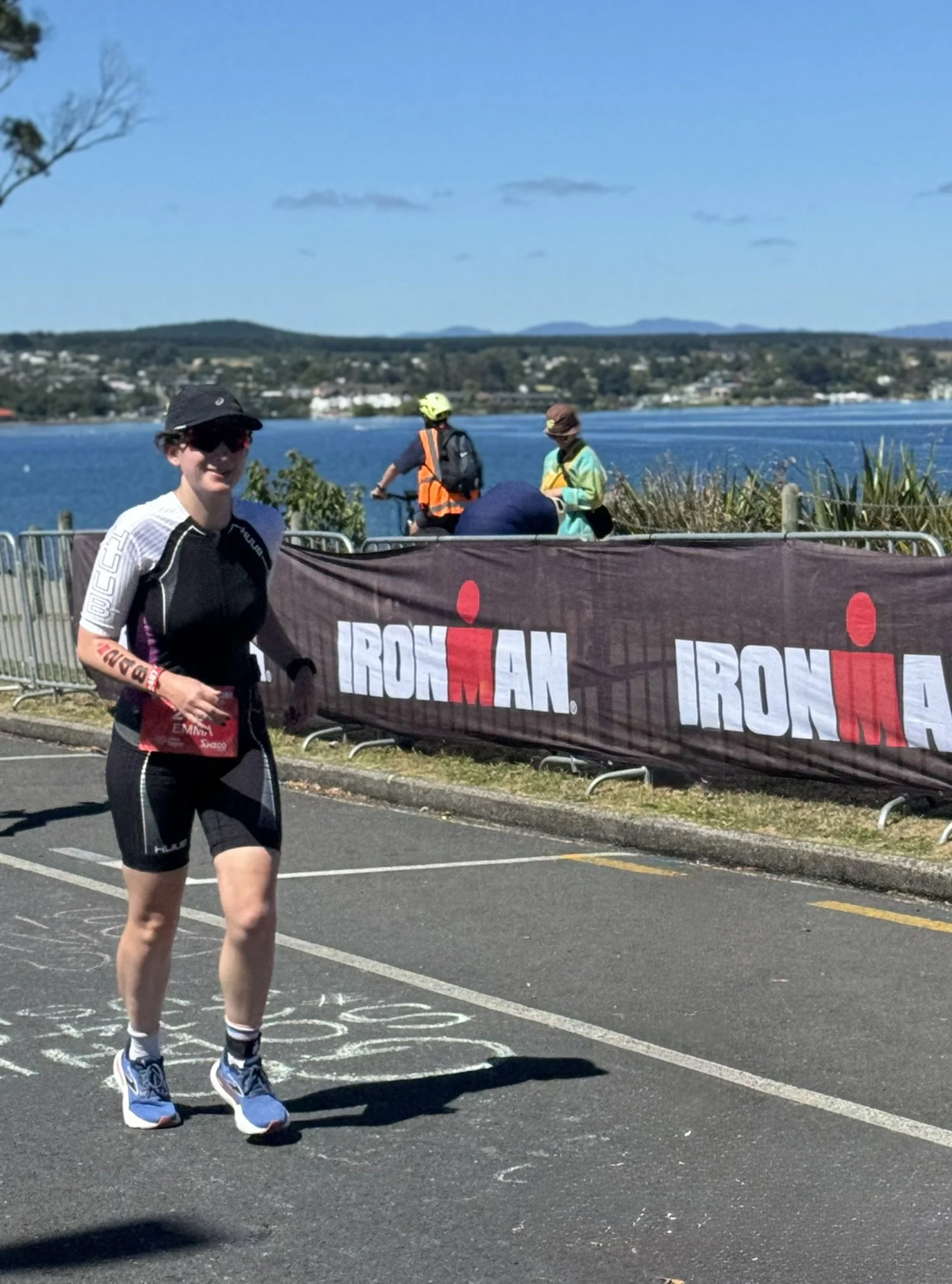
Training properly for an IRONMAN is intended to prepare an athlete for the technique, skills and fitness needed to cross the line before the 17-hour cut-off (not to mention the cut-off times for each leg of the swim and the bike). That specific training is designed to build endurance, develop legs that can handle moving all day and a gut that can fuel them, so an athlete can make it home in time before being pulled off the course.
Training is about juggling priorities; the time available (the hours each week to train and the months/years leading up to the race), the ability to recover, keeping injury free, avoiding burnout, but also being prepared enough to get through race day smoothly.
Too much training, too hard and too soon pushes up the fitness but at the risk of burnout and injury. Too little training risks your day being long and dismal. There’s a sweet-spot of having long enough to train for your goal, with enough time to make meaningful fitness gains whilst staying injury free, healthy and still motivated. This is what we are balancing as coaches and it’s essential we understand your life situation to prepare you the best we can.
It’s about balancing risk and reward.
The better prepared you are, the more likely you will genuinely enjoy your race day. It won’t be amazing all the time, but the positives will largely outweigh the negatives. It’s not just clocking in the distance but using the time leading up to your big race by attending small sprint and Olympic distances events. You don’t need to go and race them to set a PB – these are opportunities to test your gear in a low-pressure environment, practice open water swimming, experience a swim around other competitors, feel what’s it like to run out of the water onto the beach with your heart rate racing, strip off your wetsuit off in transition, run with your bike out of T1 whilst soaking wet with grass and sand in your feet, mount the bike with 20 other people all hustling next to you, eating and drinking under pressure, running off the bike whilst navigating a course and aid stations, that feeling of relief and joy of crossing the finish and then packing up your gear and cleaning it when you get home.
Experiencing all of that for the first time on race day is overwhelming. Especially if that first time is at an IRONMAN. It’s possible to do, but also unnecessarily stressful.
The athletes we see who have the most successful and enjoyable IRONMAN races are the ones who took their time with their prep, identified their weaknesses and deliberately practiced them, and faced their fears until they became second nature. They enjoyed their race day, they held their target pace without fading, the nutrition plan they practiced worked, and they weren’t constantly wishing it would be over soon. They thrived.
Then there are the survivors. The ones who convinced themselves they’d be ok with what little they did, they guessed their race pace and were surprised how quickly it fell apart, they couldn’t understand why the gels they were forcing in didn’t want to stay down, and they dreaded shuffling between aid stations on the run too depleted to enjoy the crowds around them. They survived.
We see survivors and thrivers at every race, and hands down every time the thrivers had fewer regrets and a day full of memories they cherish and look back on fondly. Meanwhile survivors were glad it was over, still happy they proved to themselves they can do hard things, but left with an experience they’d rather not relive.
Can you get by an IRONMAN with limited training and prep? Of course you can. Is it unnecessarily miserable and stressful, also yes.
And if you’re a survivor reading this and thinking ‘I did that and it wasn’t that bad’, you have nothing to compare it to.